Turn What You Know into Someone Else's Growth
Every experienced practitioner gets asked for advice. Most were never taught how to mentor. The result: war stories that close down a mentee's thinking and advice nobody asked for.
Mentoring is not coaching with advice added. It is a distinct stance that puts your experience to work for another person's development. It takes skill to do well.
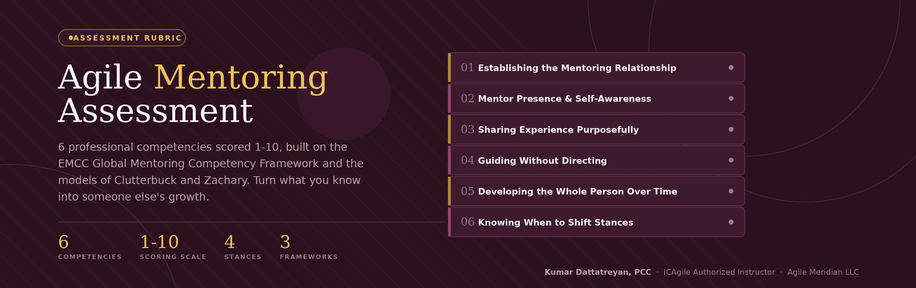
The Agile Mentoring Assessment Rubric makes the invisible skills of great mentoring visible and measurable. It integrates the EMCC Global Mentoring Competency Framework, David Clutterbuck's Developmental Mentoring Model, Lois Zachary's Four-Phase Mentoring Relationship Model and the ICAgile Agile Coaching Competency Framework. It treats mentoring as one of four stances, alongside coaching, facilitating and teaching. It scores what an observer can see and hear.
What it covers:
- Establishing the Mentoring Relationship: Contracting, role clarity, mentee choice and an honest acknowledgment of the power dynamic
- Mentor Presence & Self-Awareness: Use of self, the mentor's shadow, reflective practice and emotional regulation
- Sharing Experience Purposefully: Asking permission before advising, purposeful storytelling and choosing the story that serves the mentee
- Guiding Without Directing: Coaching questions inside mentoring, productive struggle, stretch assignments and watching for dependency
- Developing the Whole Person Over Time: Career arc, visibility, maturity and planned closure across Zachary's four phases
- Knowing When to Shift Stances: Permission protocols and moving between mentoring, coaching and teaching without a silent slide
How it works:
Each competency is scored 1-10 with specific observable behaviors. Use it for self-assessment, peer feedback and mentor supervision, or within an organizational mentor development program. Development recommendations for low, moderate and high scores give you a clear path from wherever you are today.
This rubric supports the mentoring stance in our Agile Coaching & Team Facilitation cohort, where participants practice on real workplace challenges and receive detailed feedback after every round.
Download the rubric below, and you'll also receive instruction on how to use it to strengthen your mentoring practice.