Robust Theme
Dec 09, 2019 2020-04-08 7:40Robust Theme


When AI Starts Sounding Like You: Building a Coach Between the Sessions

By: Kumar Dattatryan
A client of mine called it "e-Kumar."
He named it himself. I didn't suggest it. He just started using it that way, and when he told me, I laughed because I knew what he meant. He opens this AI agent I built for him, asks it a question, and the answer comes back in a way that sounds like the conversations we have. It pushes back. It asks the uncomfortable question. It doesn't let him off the hook the way a generic AI tool would.
And here's the thing. He's not wrong. It does sound like me, because I built it to sound like me.
I want to share what went into that, because I think there's a bigger story here for any leader, any coach, any organization that's trying to figure out what AI is actually good for in the development space. There's a lot of noise right now about AI replacing coaches, AI replacing therapists, AI replacing whatever. That's not what this is. This is something else, and I think it's more useful.
The space between sessions
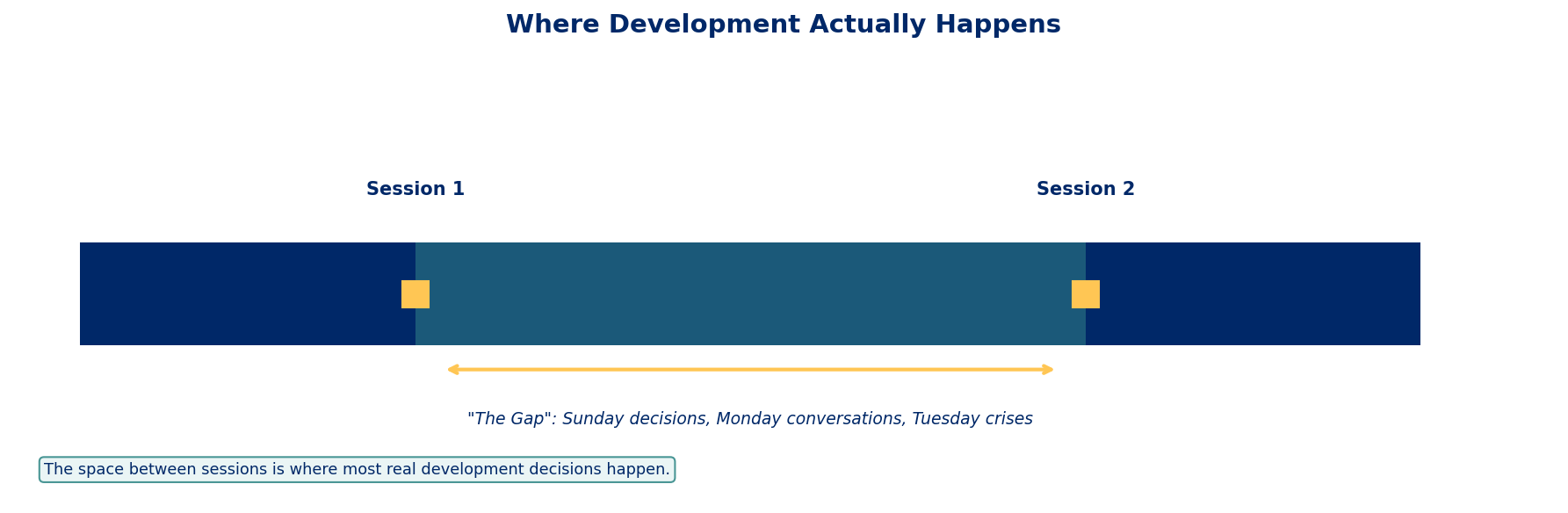
Here's a thing nobody in the coaching profession really talks about. The sixty minutes I spend with a client on a Wednesday isn't where most of the development happens. It can't be. The breakthroughs, the real moments, those happen on a Sunday night when they're sitting with a decision they've been avoiding for three weeks. They happen the morning before a hard conversation with someone on their team. They happen at eleven o'clock at night when something clicked and there's nobody to call.
Most of my clients navigate that space alone. They've got the framework we built together, but they don't have the voice that applies it consistently. They remember the insight from last week, but in the moment when they need it, they default back to what they've always done. The Avoider saboteur kicks in. The pattern repeats. By the time we get to next week's session, we're spending the first twenty minutes catching up on stuff they could've worked through on their own if they'd had the right tool.
That's the gap. And that's what e-Kumar was built to fill.
What's actually inside it
I want to be specific here because there's a difference between a chatbot and what I'm describing.
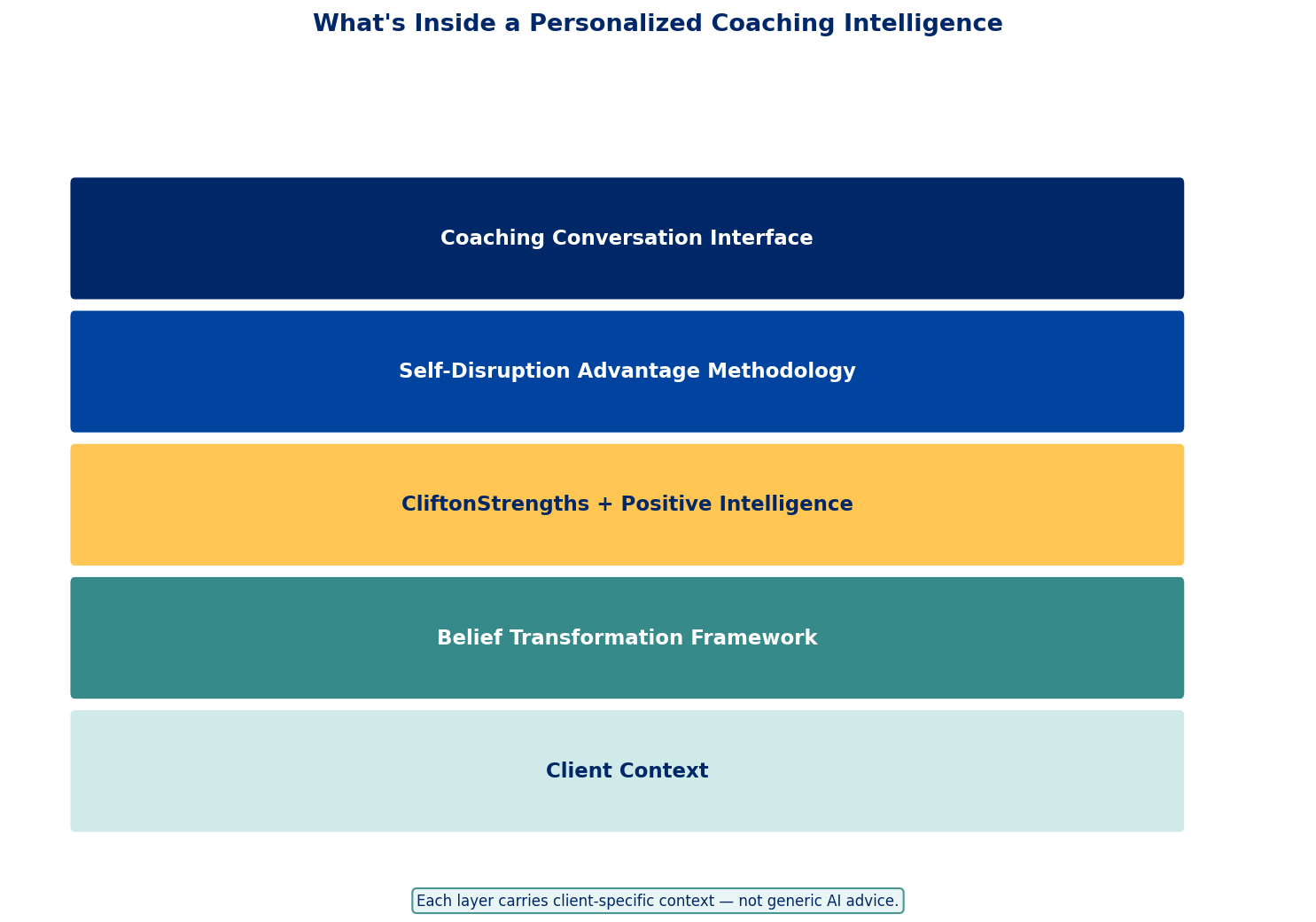
The project is built on the Self-Disruption Advantage methodology. That draws on Whitney Johnson's S-curve model, which is the idea that we all move through cycles of growth, plateau, and disruption. The coaching work I do with this client, and with most of my clients, is about helping them figure out where they are on that curve and what's keeping them stuck. So the first thing I loaded in was the framework itself. Not a description of it. The actual working model, with the language and the prompts I use when I'm coaching.
Then I layered in the client's specific data. He'd already done his Positive Intelligence saboteur assessment. So the AI knows which patterns show up under stress for him specifically. He'd done CliftonStrengths. So it can reframe a challenge through what he's actually good at, instead of defaulting to deficit thinking. When a business problem comes up, I have it reference the 5 Business Death Traps so it's listening for those specific patterns rather than giving generic business advice.
And then there's the belief transformation framework, which is really the backbone of everything. Every coaching conversation I have is ultimately about beliefs. What does the client believe about themselves? What's the ceiling they've put on what's possible? Where is a story they're telling themselves functioning as a wall? The AI is instructed to listen for those moments and ask the question that creates the opening, instead of jumping in with advice.
That last part matters. The AI is instructed to ask before it answers. Most general AI tools default to giving you a recommendation right away. That's not how coaching works. A good coach asks the question that helps you find the answer yourself. The e-Kumar holds that discipline.
What actually changed for him
So what happened? A few specific things.
He used the project on a Sunday evening to work through a personnel decision he'd been sitting on for weeks. By Wednesday, when we got on our session, he'd already made the call. He'd documented it. He'd moved on. We didn't spend forty-five minutes catching up. We went deeper into what was next.
He used it the night before a termination conversation he'd been dreading. Worked through what he was really afraid of, what the actual business rationale was, how to say it clearly. He told me later that walking into that conversation already prepared changed everything. He wasn't managing his anxiety in the moment. He'd already worked through it.
He used it the morning before a feedback session with someone on his team who wasn't performing. Same thing. He showed up ready, instead of figuring it out as he went.
What changed wasn't the coaching. The coaching is the same. What changed was that the space between the sessions became productive. And his rate of development went up because of it.
He told me something else, too, that I want to share. He said the e-Kumar pushes back on his Avoider saboteur. Not in a harsh way. Not clinical. But it asks the question that gets in the way of easy avoidance. He said that's what makes it valuable to him, instead of just convenient.
I'm not replacing myself
Look, I want to be clear about this because I know somebody's going to bring it up. Am I trying to replace myself with an AI? No. That's not what this is.
There are things a human coach does that an AI just can't. Reading what's not being said. Noticing the energy shift mid-sentence. Holding space when somebody's about to say the thing they've never said out loud. The trust that lets a client be honest about what they're really afraid of, that's built through a relationship, not a prompt. I'm not going anywhere.
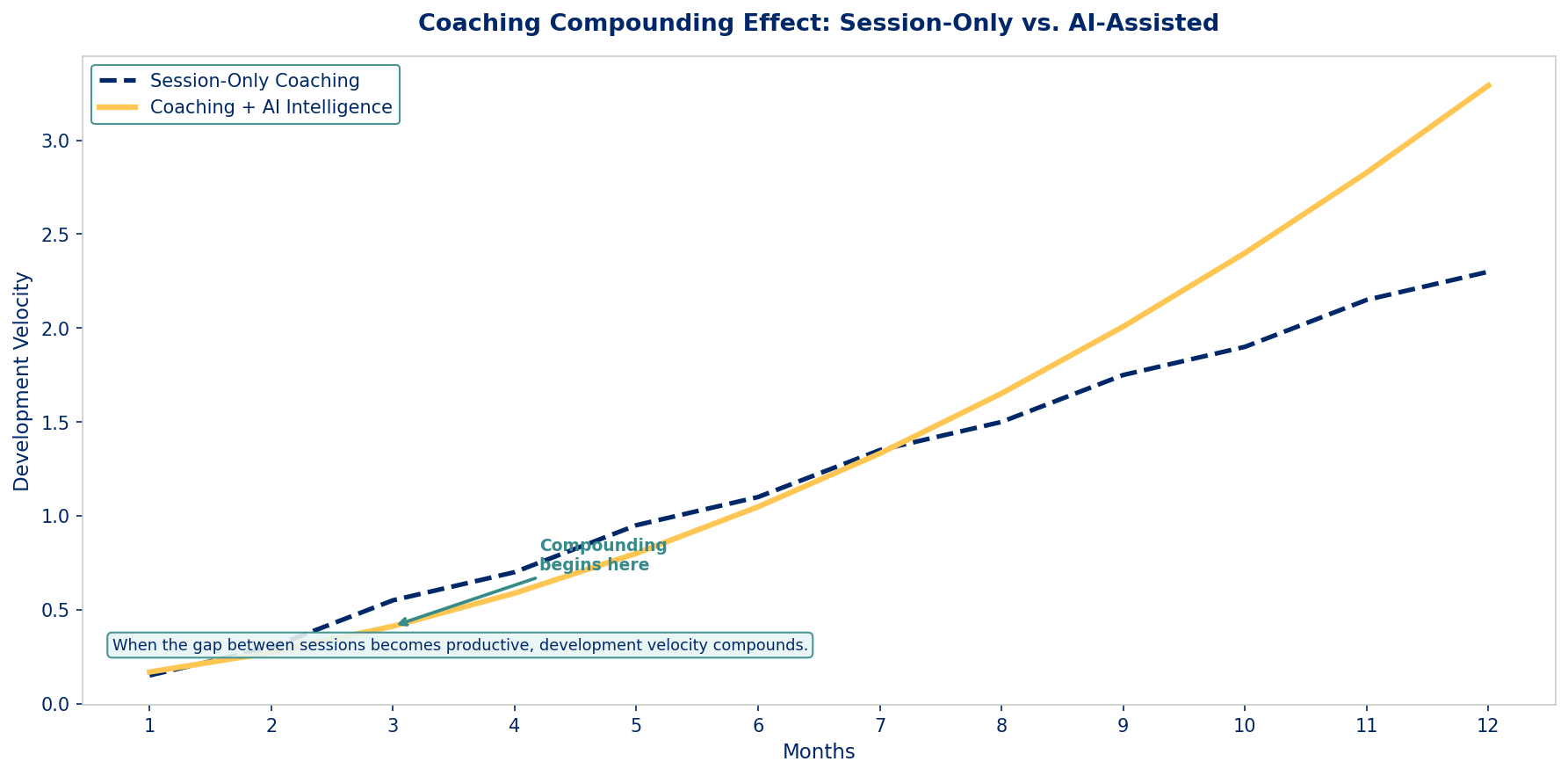
What the AI does is hold the framework when I'm not there. Different function, not a competing one. I introduced it to my client as a supplement, and he's used it that way. He's not skipping sessions. He's coming to sessions one or two layers deeper than he used to, because he's done the surface work already.
Why generic AI doesn't do this
Here's what I think is most important, because I think this is the part that matters for anyone reading this who's wondering about AI in their own work.
Most people have tried using a general AI tool to think through a work problem. The experience is fine. It's like getting advice from somebody who's read a lot of books. There's nothing wrong with it, but it doesn't really change anything for you, because the AI doesn't know you. It doesn't know what you've already tried. It doesn't know which pattern you fall into when you're under pressure. It doesn't know what framework you're working in.
The e-Kumar is different because it knows all of that. It knows this specific client. It knows his saboteur profile, his strengths, his goals, the work we've done together. It knows the methodology. So when he asks it a question, it's not pulling from the internet. It's pulling from his own context, applied through a framework he's already invested in.
That specificity is what makes coaching work. And it's what makes coaching AI work, when it works.
What this could mean for organizations
If you're running a leadership development program in a large company, this is worth thinking about. You've got hundreds, maybe thousands of managers and senior leaders who are getting coaching or development conversations once or twice a month at best. The consistency problem is the same one I had with my client. A great conversation on Tuesday is gone by Friday. Default behavior comes back.
A leadership intelligence built on your organization's actual values, your operating principles, your competency model, loaded with the context of the specific leader using it, that's a different proposition than generic AI training. You're not replacing the coach. You're making the framework available in the moments that actually matter, instead of just the hours on the calendar.
The technology to build this exists right now. What most organizations don't have is the clarity about what to load into it. And that's actually the harder part. The AI is only useful if the framework behind it is real.
The question I keep coming back to
My client named his AI "e-Kumar" because it feels like a consistent version of what we do together, available whenever he needs it. That label has stuck with me, because it points at something I think is true.
The most valuable coaching isn't what happens in the session. It's the shift in thinking that persists afterward. The question that rewires something. The framework you start applying without being told to. That shift happens faster when the framework is consistently present, not just when the calendar says it's time.
So the question I'd leave you with is this. How available is your best thinking to the people who need it most? For most of us, the honest answer is, only when we're in the room. That used to be the only answer. It isn't anymore.
Related Podcast Episodes
If you want to go deeper on the themes in this post, here are three episodes from The Meridian Point worth your time.
Episode 147 — How AI Is Disrupting Leadership Communication & Executive Coaching My conversation with Ash Siddique, founder of Mevante, where we get into exactly this question. He's built custom GPTs for coaching at companies like Cisco and Uber, and he makes the case for what he calls communication intelligence. If you want to hear the full thinking on AI as a coaching supplement, start here.
Episode 152 — From Agile to AI: Avoiding the Same Transformation Mistakes A conversation with Reha Malik on why so many AI initiatives fail for the same reason Agile transformations did. We get into hallucinations, the importance of context, and why generic AI tools come up short when the work demands real specificity. This is the broader version of the argument I make in the "why generic AI doesn't do this" section above.
Episode 151 — From Agile Burnout to Reinvention Coach: Todd Kamens' Transformation Todd Kamens has built his own custom GPT for reinvention coaching, and we talk about the S-curve work from Aidan McCullen that ties directly into the Self-Disruption Advantage methodology. If the framing in this post resonated, this episode goes another layer down on what continuous personal reinvention actually looks like in a world where AI is changing the rules.
If you want to talk about what something like this could look like for your team or your organization, you can grab time on my calendar here: tidycal.com/coachkumar/30-minute-meeting
And if you're not sure where you are on your own S-curve right now, the Disruptor Method assessment is a good place to start: thedisruptormethod.com/quiz