Robust Theme
Dec 09, 2019 2020-04-08 7:40Robust Theme


Change Management Starts With Observation

By: Kumar Dattatreyan
You reorganized the team before you watched it work. You redrew the boxes, moved the reporting lines and announced a new operating model, and you did all of it from a conference room nowhere close to where the actual work happens. Then you were surprised when it didn't take root.
I'm not here to make you feel bad about that. I've done it too. I'm here to tell you that a bunch of gardeners figured out why it fails about forty years ago, and they weren't even trying to talk to you.
That's the setup for this series. I want to walk the twelve permaculture principles and read each one as a discipline for people who lead change. Yes, permaculture. Gardening. Stay with me, because the first principle alone will change how you run your next reorg, and it's only two words.
What permaculture actually is
Permaculture isn't composting and it isn't a lifestyle brand. Two Australians, Bill Mollison and David Holmgren, coined it in the 1970s by mashing together permanent and agriculture, and later permanent and culture. It's a design discipline. The core move is simple and a little humbling. Instead of forcing a system to obey your plan, you study how healthy natural systems already sustain themselves, and you design with that grain instead of against it.
A forest nobody manages doesn't hold status meetings, and it outperforms most farms on resilience. That should bother you a little. It bothered me. The permaculturists turned it into twelve design principles, and Holmgren put one of them first on purpose. Observe and interact. Everything else depends on it, because you can't design from patterns you never watched.
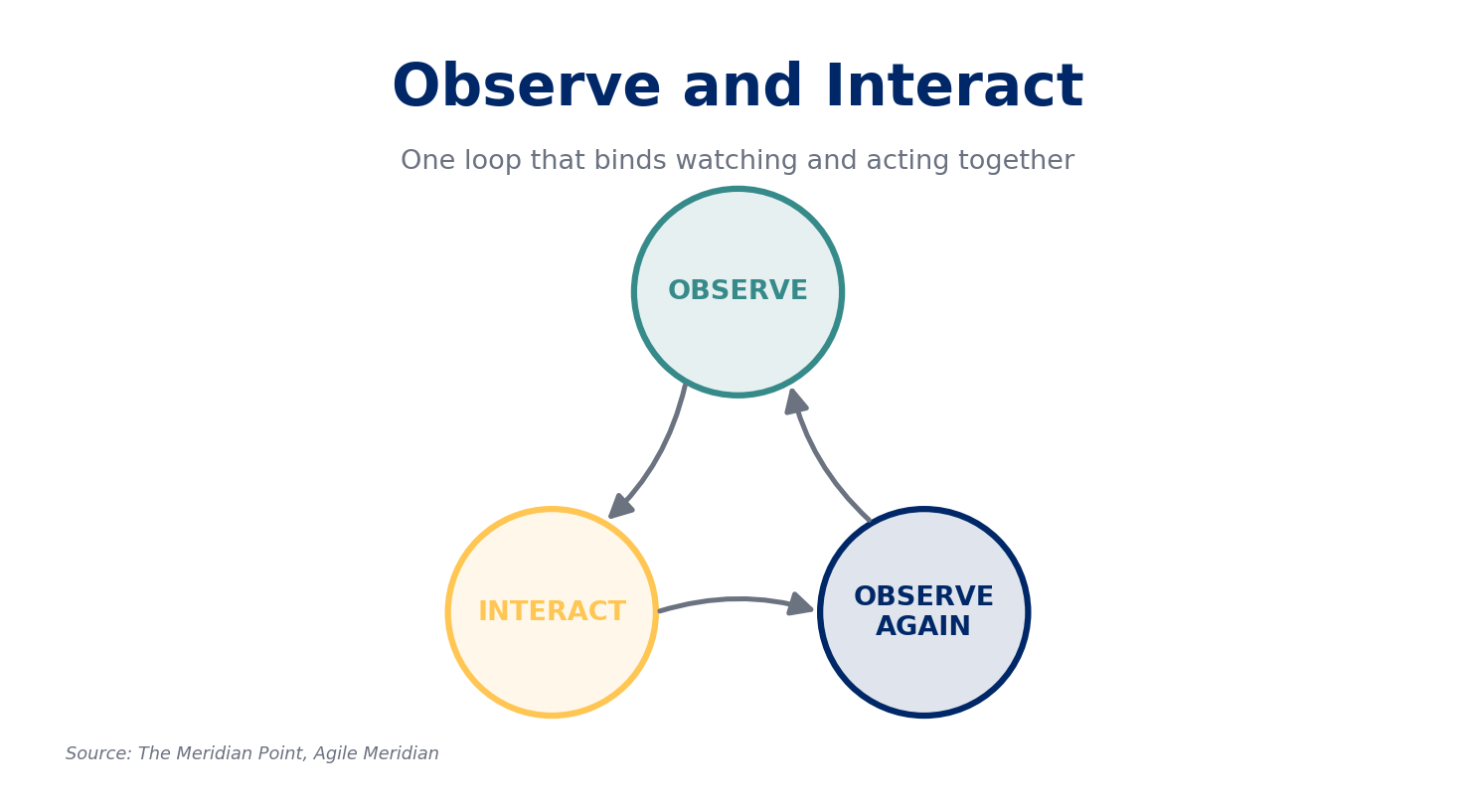
So why does a leadership podcast keep coming back to a gardening framework? Because an organization is a living system wearing a suit. It has flows, feedback loops and a strong tendency to route around whatever you impose from the top. Glenn Marshall and I have circled this on the show more than once, and the principles stopped sounding like gardening and started sounding like the sharpest change-management advice in the building.
The organizational cousin: XSCALE
Here's where it stops being a metaphor and starts being a method, because someone already built the organizational version.
There's an approach called XSCALE, put together by Peter Merel, and its whole premise is descaling rather than scaling. Most transformation programs push change down through the org by force. XSCALE does the opposite. You find the handful of people who already want the change, you form what Merel calls a steel thread, a thin self-propagating strand of value that runs from vision all the way to delivery, and you let the change pull through the system instead of shoving it. The steel thread spreads without wrecking the teams around it. Merel's own word for the goal is non-destructive.
Read that word again. Non-destructive. That's observe and interact, stated as an organizational design principle. You change something real without throwing the whole thing out of balance. Same instinct, arriving from two directions, the gardener and the org designer landing on the same rule.
I'll admit my hand here. When my partners and I built The Disruptor Method™, the steel thread idea came straight out of XSCALE. I borrowed it on purpose, because it worked, and because it respected the system instead of bulldozing it. This isn't theory for me. I lean on it every time.
Observe and interact isn't a warm-up before the real work. It's the real work, compressed into two words, and leaders fail it in two directions.
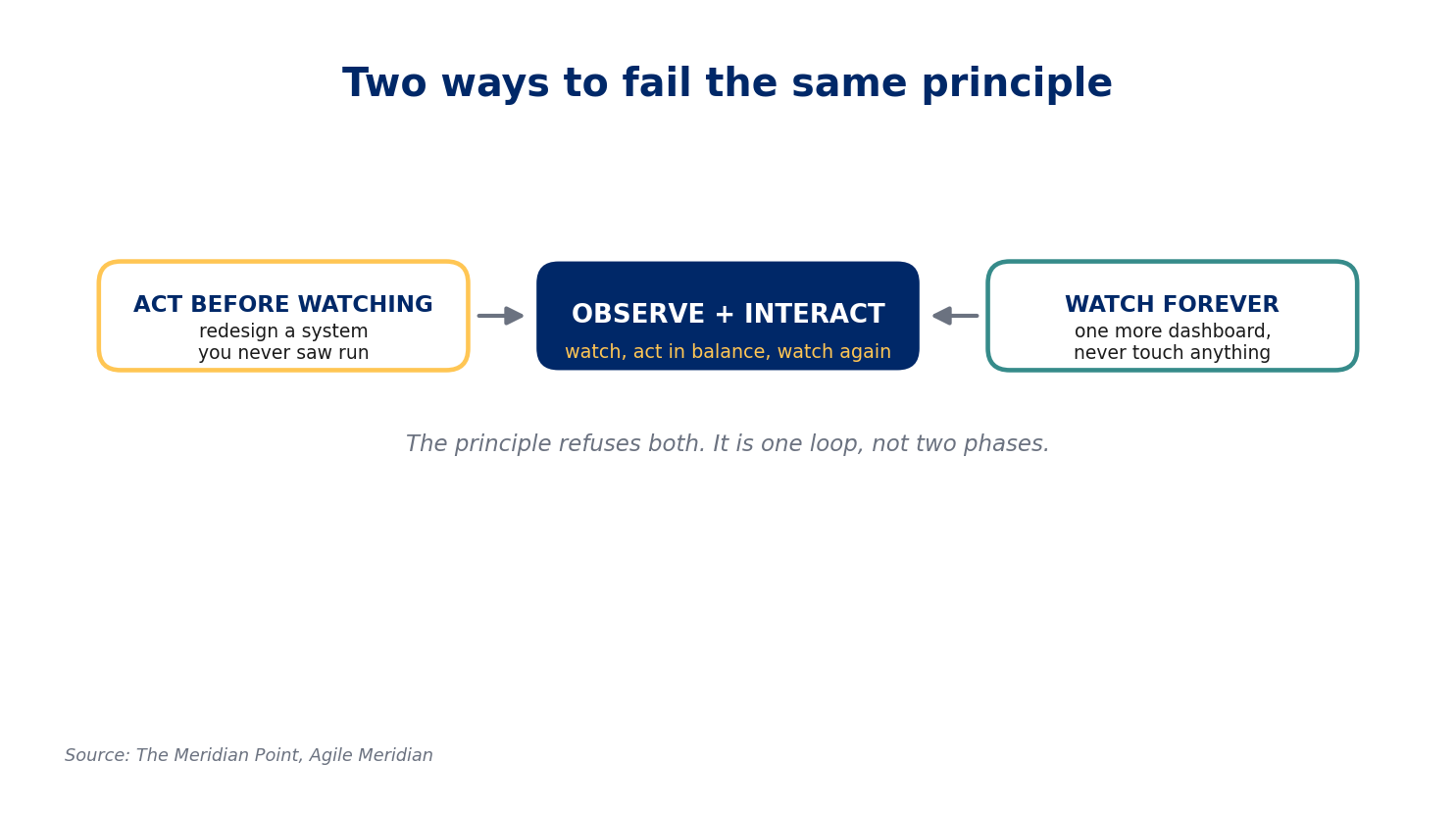
The first failure is acting before you observe. I see this all the time. You see a number you don't like, you form a theory in a room, and you redesign a system you've never actually watched run. The redesign is elegant. It solves a problem the system doesn't have. Marwan El Harbili named the cost of this on the show. You end up with a great solution to the wrong problem, because you never understood the real problem. You modeled a different one and solved that.
The second failure is the opposite, and it hides better because it looks like diligence. This is the leader who observes forever. One more survey. One more quarter of data before we commit. Watching becomes a way to avoid touching anything, and the system drifts while the study drags on.
The principle refuses both. Watch how the system actually behaves. Act in a way that keeps it in balance. Then watch what your action changed. That's one loop, not two phases, and it never really ends.
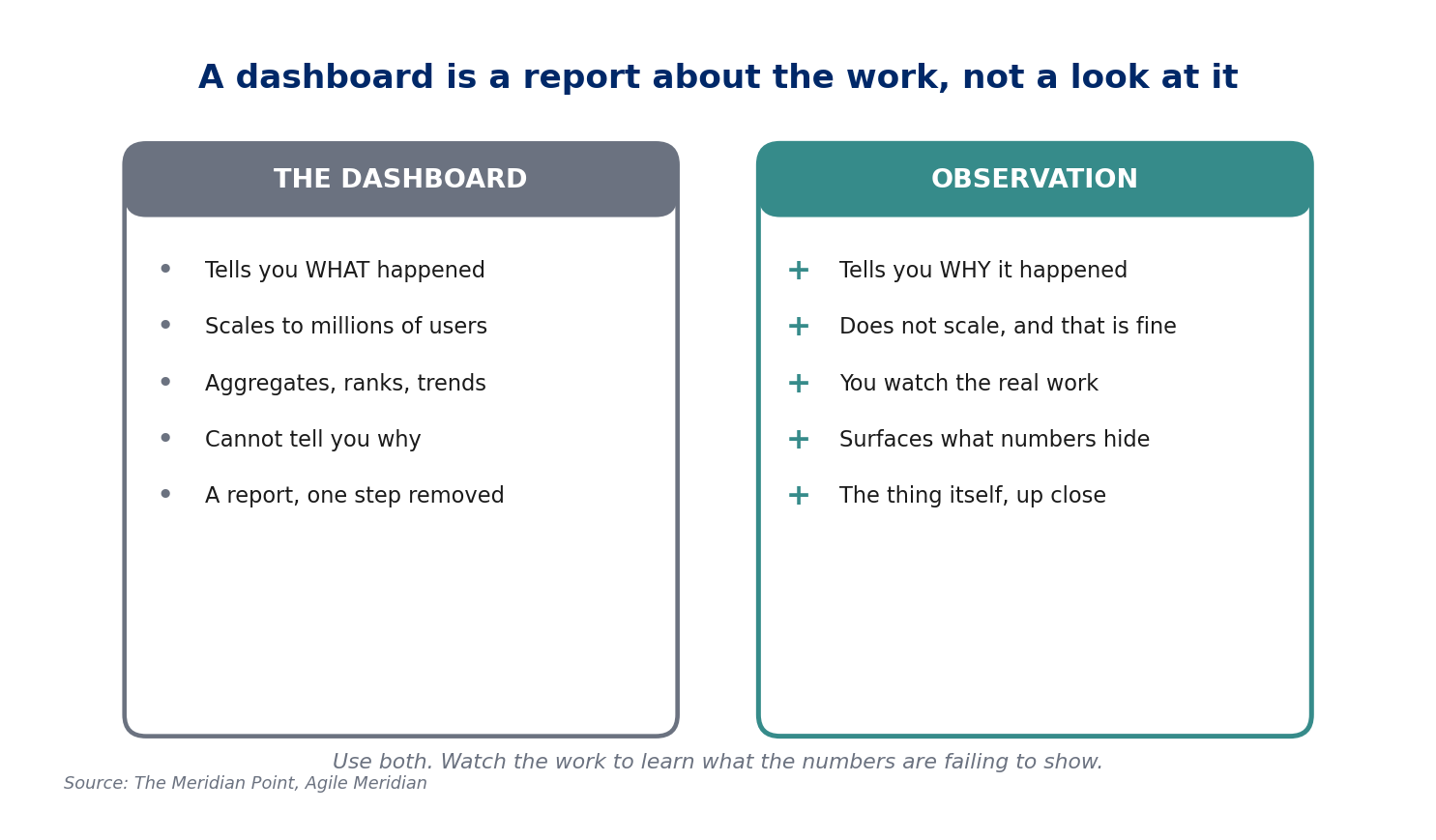
Start with the watching, because most leaders swear they already do it. They have dashboards and weekly metrics, and they're convinced they're observing the system.
They're observing a report about the system. Not the same thing, and the gap between the two is exactly where the expensive decisions go wrong.
Roman Pichler drew this line from inside product management, and he isn't some anti-technology holdout. He credited the analytics tools of the last twenty years as a genuine advance in the field. Then we talked about what they cost. The tools pulled product people away from the humans they build for. The fix was to go back to the source. "Human interaction and being able to observe a perspective or existing customers and users and talk to them, interview them, is so important so you can empathize with them. You can really understand their needs and then make the right product decisions." He drew the limit hard. "I wouldn't trust a tool. I wouldn't trust algorithms. I wouldn't trust AI to truly understand human needs and come up with the right meaningful solution."
That's observe and interact pointed at a product, and product people already have a word for it. Discovery. You watch real humans touch the real thing. The dashboard tells you what happened. Watching tells you why, and the why is the only part you can act on.
Now the honest objection; the data-first crowd has a real point, of course. Direct observation doesn't scale. You can watch five users. You can't watch five million, and telemetry across five million will surface patterns no amount of shoulder-surfing will ever catch. Three vivid customer visits aren't data, and a leader who trusts them over a clear signal in the numbers is fooling himself in the other direction.
That objection is correct, and it doesn't lay a glove on the principle. It sharpens it. The choice was never observation instead of data. You watch the work precisely to learn what the numbers are hiding, and then you know which numbers to trust and which ones are lying to you with a straight face. A metric pulled from a system nobody's actually watched is a rumor with a number attached. Go see the work before you argue about the figure describing it.
Interact without breaking the thing you depend on
Watching is only half. The second word carries its own discipline.
Glenn gave me the operating image years ago, on the episode that kicked this off. In a natural system you don't command the ecosystem. You're a part of it. As he put it, "you interact in a non-destructive way that doesn't destroy the ecosystem." You find the small move that works with the system instead of the large move that overrides it. And the reason the small move matters is that the system is built from parts you don't control. "Each of the individual pieces just goes about doing their thing," Glenn said, and the whole holds together because each piece responds to its neighbors, not to your master plan.
Your organization works the same way. You aren't standing outside it pulling levers. You're inside it, and it responds to what you actually do, not to what you announced in the all-hands. So the skilled interaction is the one that changes something real while keeping the system running. That's the steel thread again. Small, alive, non-destructive, pulling change instead of forcing it.
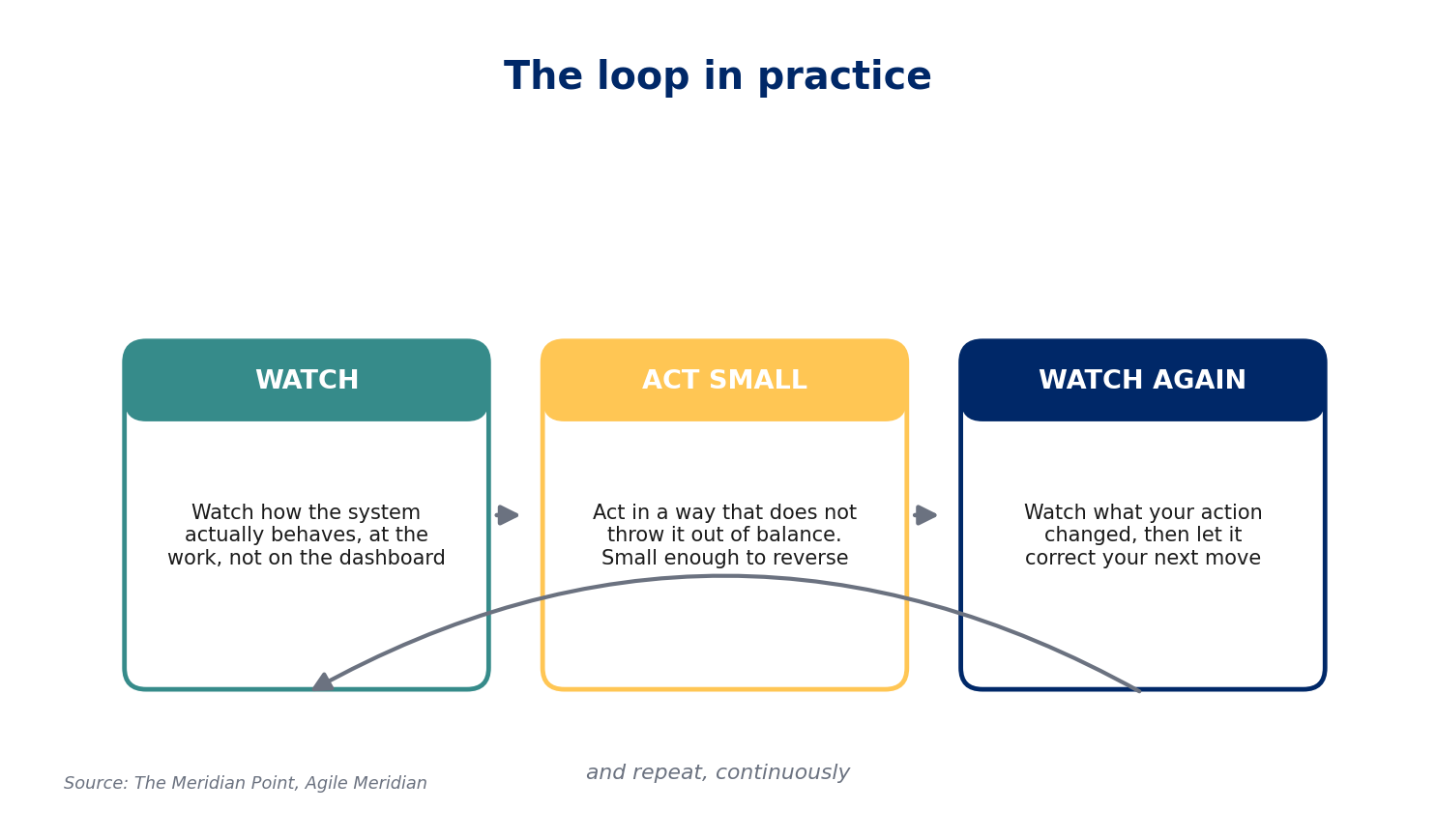
This is where the observe-forever leader needs an answer, and it isn't "act faster." Fail fast is the wrong instruction, because it tells people the goal is failure, and then everyone gets weird about it. The real goal is to lower the cost of being wrong. Redesign the way you act so a wrong move is cheap to make and cheap to undo. When being wrong costs almost nothing, you stop needing perfect observation before you move, and observation becomes continuous instead of a gate you hide behind. Cheap interaction is what keeps the watching honest.
You never watch the system, only your model of it
There's a catch in all of this, and the principle is stronger for owning it. Observation is never neutral.
Marwan said the sharpest version of it. "The model is what you're actually working with, not the system. You never work with the system. The system is there. It does not depend on you." You don't have direct access to your organization. You have a model of it in your head, and the model quietly decides what you can even see. Two leaders watch the same team and notice different things, because they carry different models.
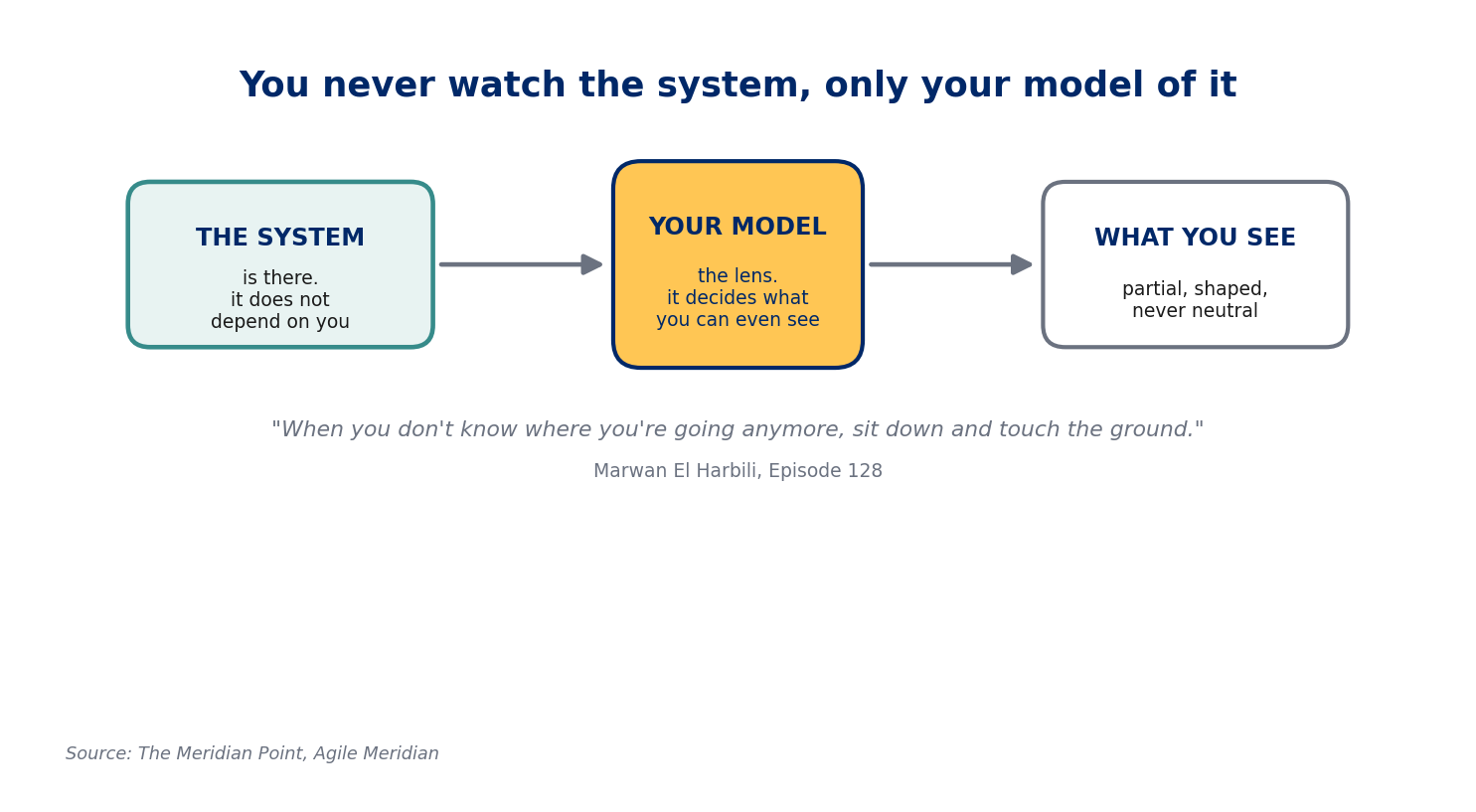
This isn't a reason to stop observing. It's a reason to hold your model loosely and let the work push back on it. When your watching only ever confirms what you already believed, you aren't observing. You're decorating your assumptions. Marwan offered a Moroccan proverb for exactly that moment. "When you don't know where you're going anymore, sit down and touch the ground." Get out of the model and back to the work.
The corporate translation
In a garden, nature is the gatekeeper. It decides what survives your interaction whether you asked for feedback or not. In an organization there's no nature. The leaders and the doers are the gatekeepers, so the accountability the ecosystem carries for itself, you carry on purpose. This connects back to something I wrote recently, that the friction in your organization is data worth reading. That's the observe half. The permaculture frame demands the other half. Act on what you read without knocking the system over, then read again. Observation without interaction is just watching it wilt and writing that down.
Three things to do this week
So what do you actually do with all this? Start here.
Go watch one thing you currently only measure. Pick a number you review every week and have never once seen produced. Sit with the people who produce it and watch the actual work behind the metric for an hour. You'll learn something the dashboard has been quietly hiding, and you'll know it inside the hour.
Make your next change small enough to reverse. Before the big redesign, find the smallest version of it that touches the real system, and ship that. This is the steel thread move. You aren't trying to fail. You're lowering the cost of being wrong so you can keep watching while you act.
Name the model you're using. Before you diagnose anything, say out loud what you already believe is broken, then go looking for what that belief would make you miss. The SORI™ pass we run inside The Disruptor Method™, the honest inventory of Strengths, Opportunities, Risks and Impediments, exists for exactly this. Make the model explicit so the observation can argue with it.
Observe and interact earns the series its footing. Watch, act, watch again. Part two takes the next principle, catch and store energy, which Glenn reframes as catch and store learning in small self-organizing teams. The steel thread, again. Observation is wasted if the organization forgets what it saw. We started with watching. Next we deal with remembering.
Related Podcast Episodes
Episode 67, From Permaculture to Agile Organizations, with Glenn Marshall. This is the conversation that seeded the whole series, and where Glenn and I first paired the permaculture principles with XSCALE-style descaling. His framing of non-destructive interaction is the spine of this piece. Watch it: https://www.youtube.com/watch?v=Lw9Bj0si2ho
Episode 125, Humanizing Product Disruption, with Roman Pichler. Roman makes the case that analytics tools, for all their power, have pulled product people away from the users they serve, and that watching real humans is the irreplaceable act. It's observe and interact applied to product work. Watch it: https://www.youtube.com/watch?v=MgGuMf_lHxU
Episode 128, Systems, Strategy, and the Symphony of Change, with Marwan El Harbili. Marwan is the systems thinker who warns that you never work with the system, only your model of it, and who offers the proverb about touching the ground when you lose your way. He keeps this principle honest about the limits of observation. Watch it: https://www.youtube.com/watch?v=_xnSYM8sSeo
Where in your organization are you acting on a system you haven't actually watched? Take the assessment and find the gap between the reports you review and the work they claim to describe.