Robust Theme
Dec 09, 2019 2020-04-08 7:40Robust Theme


Build Self-Regulating Teams With Feedback Loops
By: Kumar Dattatreyan
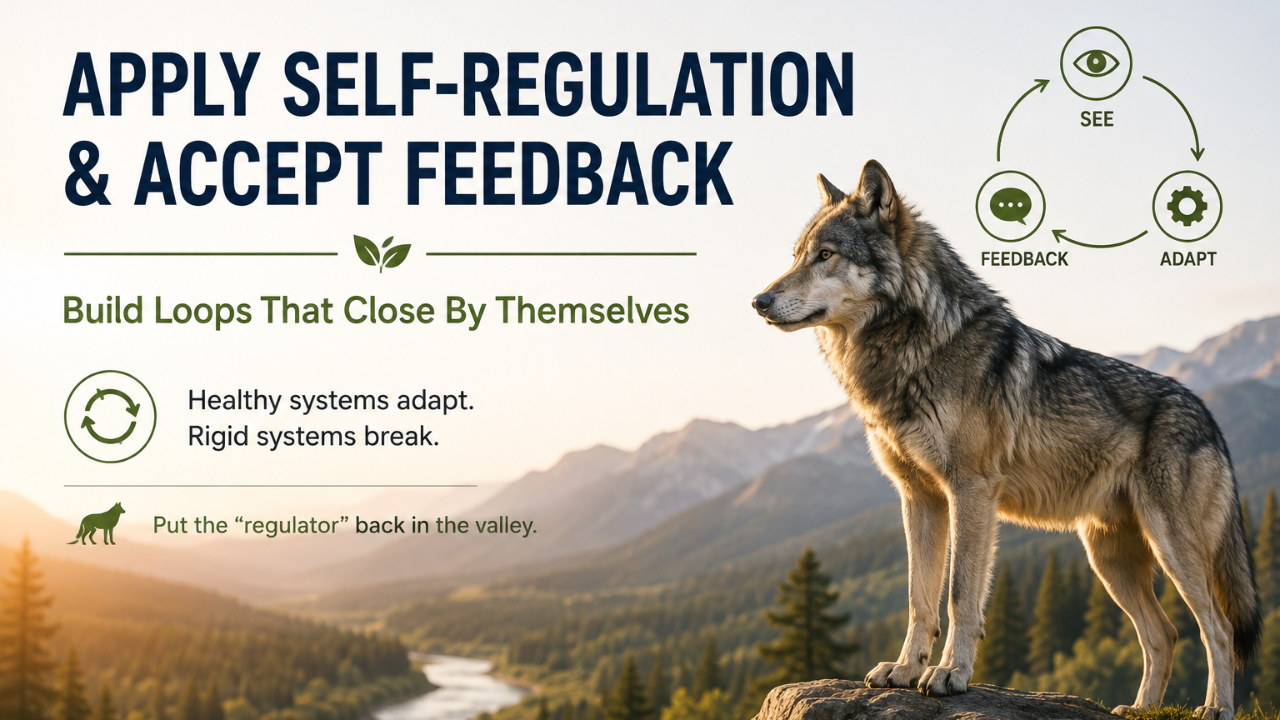
Yellowstone lost its wolves and the deer ate the valley down to the riverbanks. No deer got a memo. No deer needed one. The regulator was gone, so the system ran open loop until it broke. Rivers changed course. Whole stretches of vegetation thinned out. Nobody in the system knew the big picture, and that was never the point. The valley used to correct itself, and then it couldn't.
Your organization runs the same experiment every day it routes the truth through an annual review, a status meeting and a manager who frowns at bad news. The signal exists. It just arrives too late to steer anything, or it never arrives at all because someone decided it could wait.
Permaculture names the missing part in its fourth principle. Apply self-regulation and accept feedback. XSCALE interprets it as small groups of teams aligned into self-managing business streams that adapt their priorities to market feedback as it changes. The fix isn't more oversight. Oversight is a ranger with a quarterly census. The fix is putting the wolf back in the valley. That's where part four of this series goes.
Regulation isn't control
Principle four gets misread as a call for tighter governance. It's the opposite. Control and regulation aren't two flavors of the same thing. They pull in different directions.
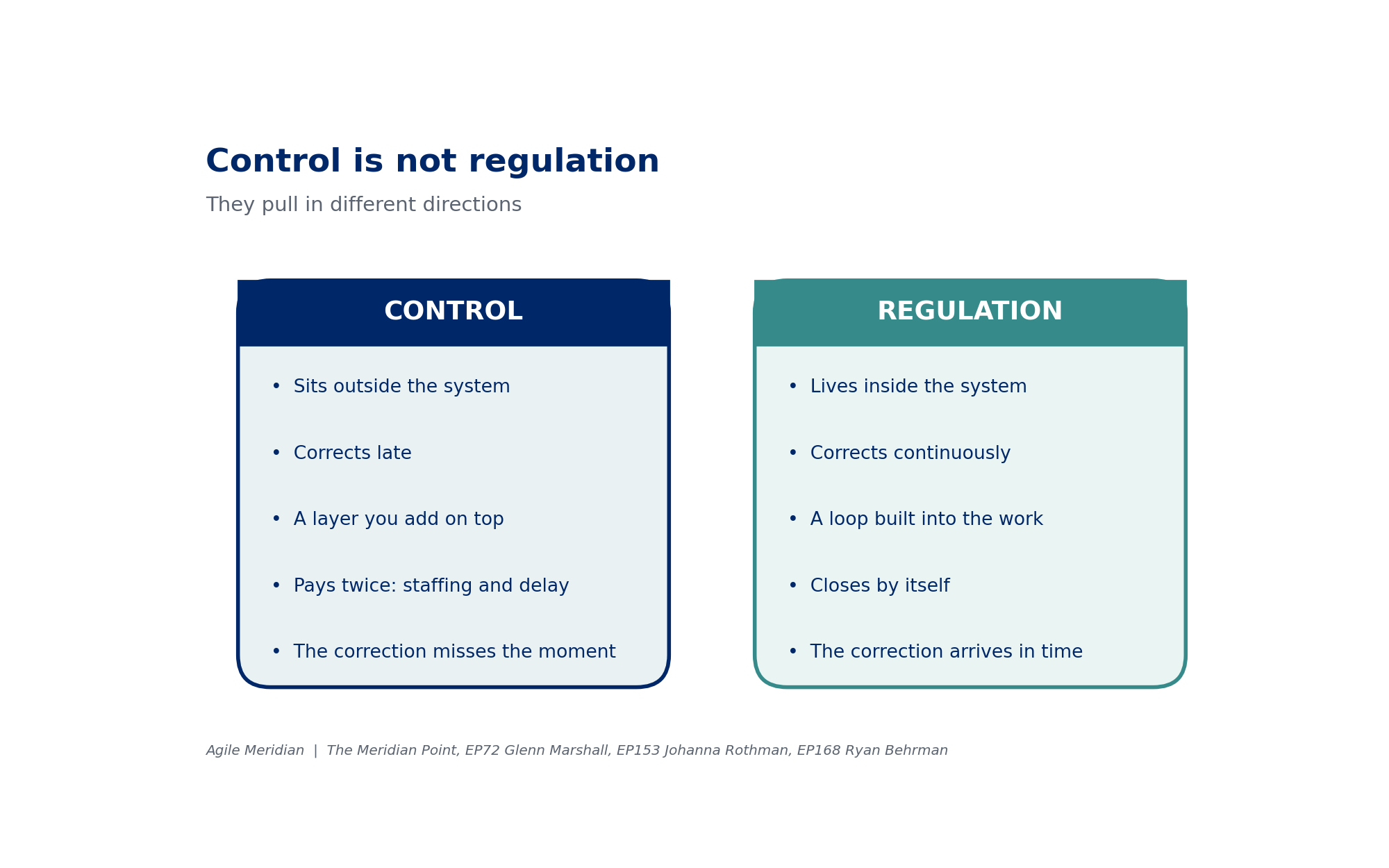
Control sits outside the system and corrects it late. A steering committee that convenes once a quarter and rules on what already happened. Regulation lives inside the system and corrects it continuously. The wolves don't file a report. They change what the deer do by being in the valley.
The organization that answers a steering problem by adding oversight pays twice. Once to staff the review layer, and again in the delay that layer adds. The correction still shows up after the moment it could have changed the outcome. You bought a slower version of the problem you were trying to solve.
Glenn Marshall on the structural regulator
Glenn Marshall and I walked the Yellowstone case on episode 72, the spine of this installment. Wolves removed, deer unchecked. The rivers paid for it. The regulation there was structural, not managerial. No animal held the plan. As Glenn put it, "none of the parts need to know about the big picture it just works."
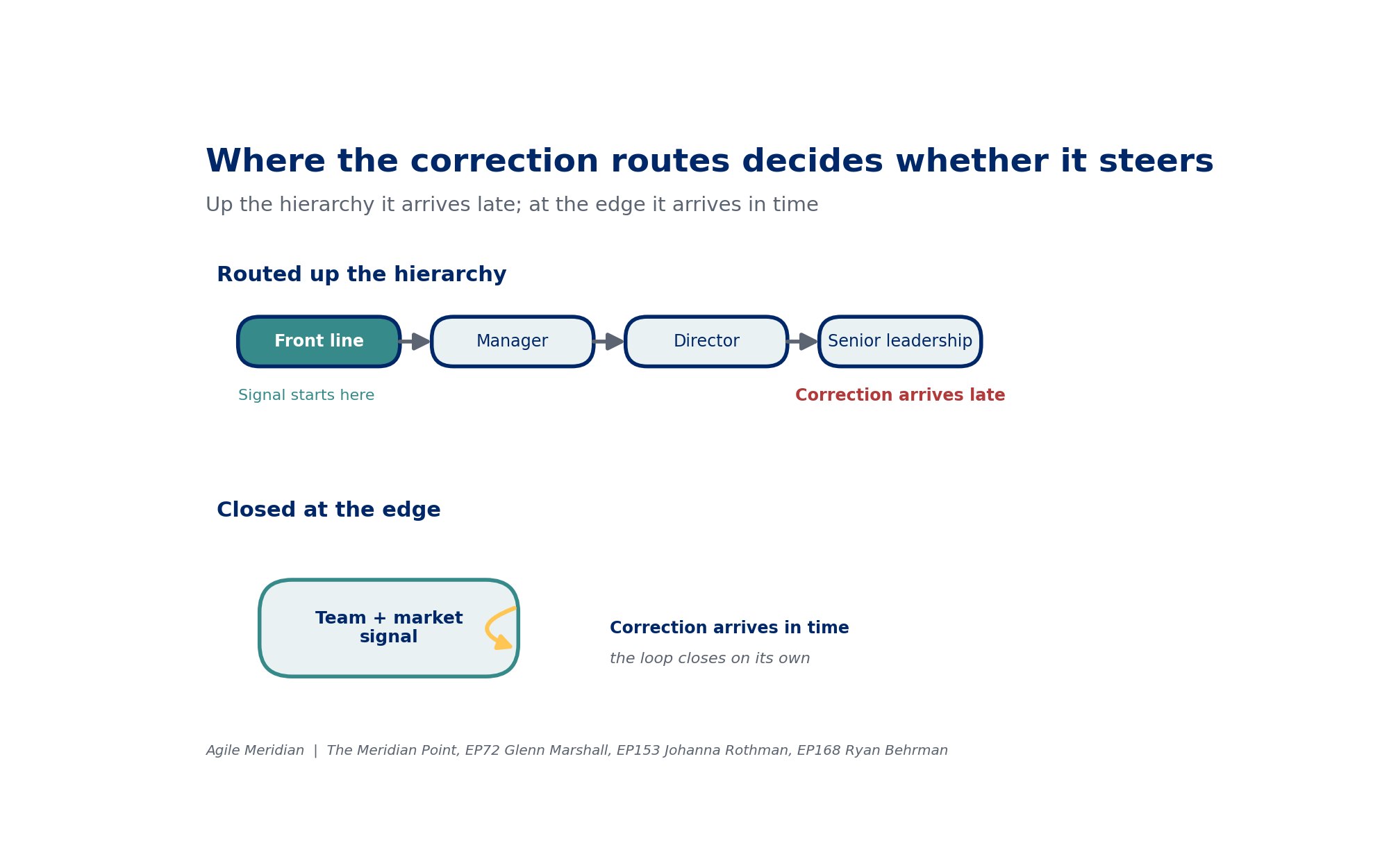
That's the design instruction hiding inside principle four. You don't build regulation by making sure someone at the top can see everything. You build it by putting the correcting force inside the system, close to where the change happens.
Glenn then took the ecology into the org. Streams that hold their own P&L focus themselves. Autonomy stays inside alignment to shared goals and ethics. "these are not people going rogue they're they're still aligned they just have the the freedom to go and pivot when things on the ground change." That line answers the first objection every executive raises. Autonomy without alignment is chaos, and nobody's arguing for chaos. The stream adapts how it works, not what it stands for.
He also said why the loop can't route through the top. "senior leadership doesn't have a chance to hear about these changes but the people on the ground do." This is line of sight, and it cuts one way. The people doing the work get the market's signal first. Senior leadership gets it after it's traveled up three layers and lost its edge. Route the correction through the hierarchy and you've guaranteed it arrives late. The org chart itself becomes the delay.
Johanna Rothman on the clock
A loop only regulates if the signal arrives while you can still act. That's the part Johanna Rothman sharpened on episode 153.
Johanna splits feedback from evaluation, and the split does real work. Everyone needs feedback. Almost nobody needs evaluation. Performance management is the annual, individual, evaluative version of a loop, which is exactly why it regulates nothing. "Yes, people need feedback, but managing performance is useless." By the time the annual review shows up, the behavior it's correcting is eleven months cold, and recency bias means the review reflects the last three weeks anyway.
Her diagnostic is the one most leaders skip. Measure the wait. "the wait time in organizations really outweighs any of the work time. And if managers can start to measure wait time and manage that, they will get almost everything they want." The loop doesn't die in the work. It dies in the gap between the work and the decision, where the signal sits in a queue waiting for the next meeting where everyone's finally in the room.
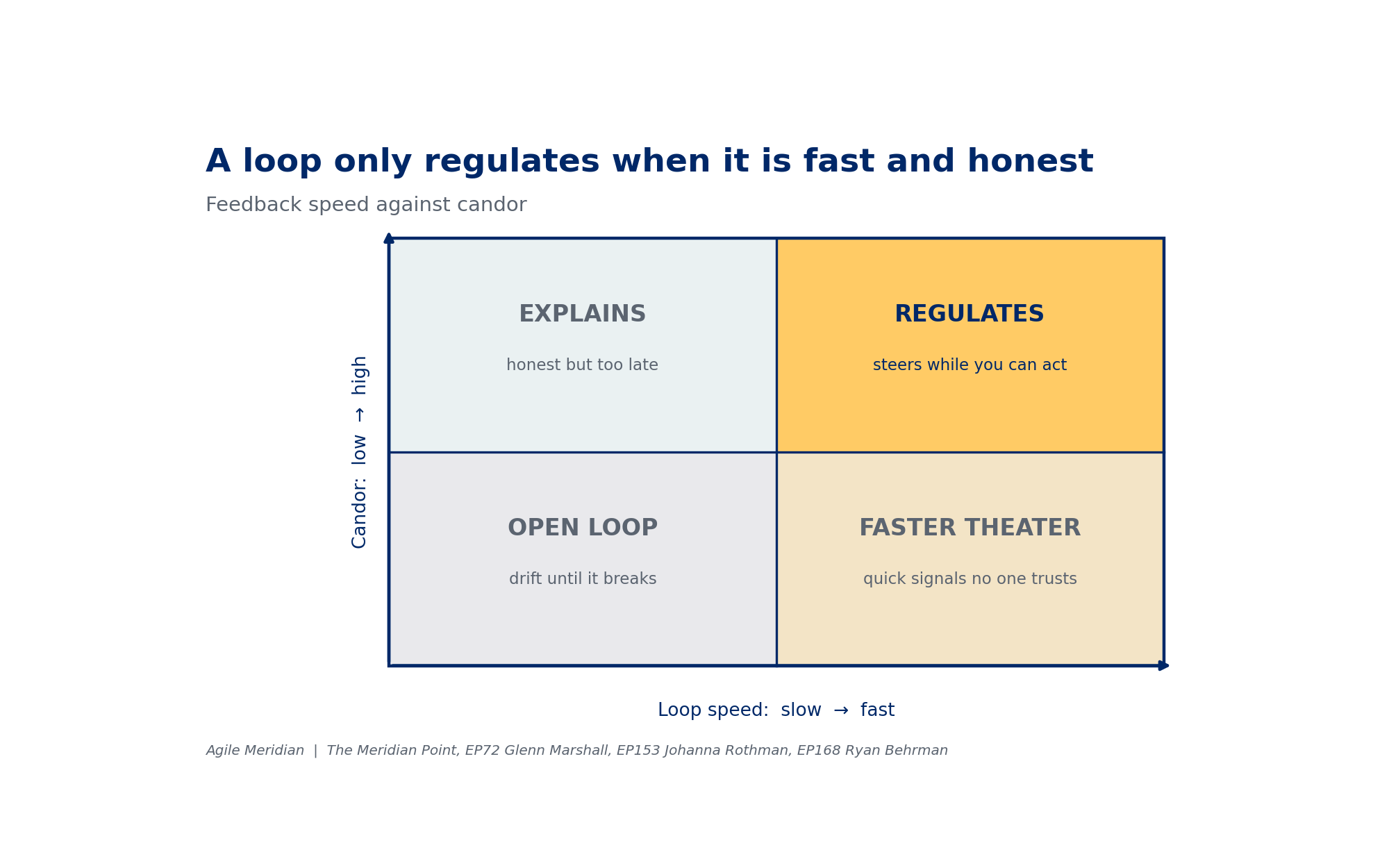
Her fix is to make the loop short enough that the answer changes what you do next. Finish something every day or two. A loop that closes weekly can steer. A loop that closes yearly can only explain.
She finished on the human side with a story every leader has been on one side of. A leader who frowns at bad news teaches the system to stop sending it. You regulate the feedback you receive whether you mean to or not. Frown once at the messenger and the next messenger stays home, and the loop you thought you had is already gone.
Ryan Behrman on the human loop
The same failure shows up at the level of one person. Ryan Behrman gave me the sharpest version on episode 168.
Every capability run open loop overshoots. "Every strength at some point will become overplayed. The person who is very determined will at some point become pushy." Determination becomes pushiness the way deer become overgrazers. The strength isn't the problem. The missing correction is.
Ryan's fix isn't an assessment or an annual score. It's real-time feedback from the people in the room. "It is not about the cards you end up with. It is the feedback you get to give people in real time." The correction that works comes from a teammate who felt the overplay firsthand and said so in the moment, built into how the team operates. Not a report read alone at a desk two quarters later.
That's principle four applied to people. The team regulates itself when giving feedback is a normal act inside the work, not an event scheduled outside it.
Three loops at once
Put the three together and the principle turns operational. A self-regulating organization runs three loops at the same time.
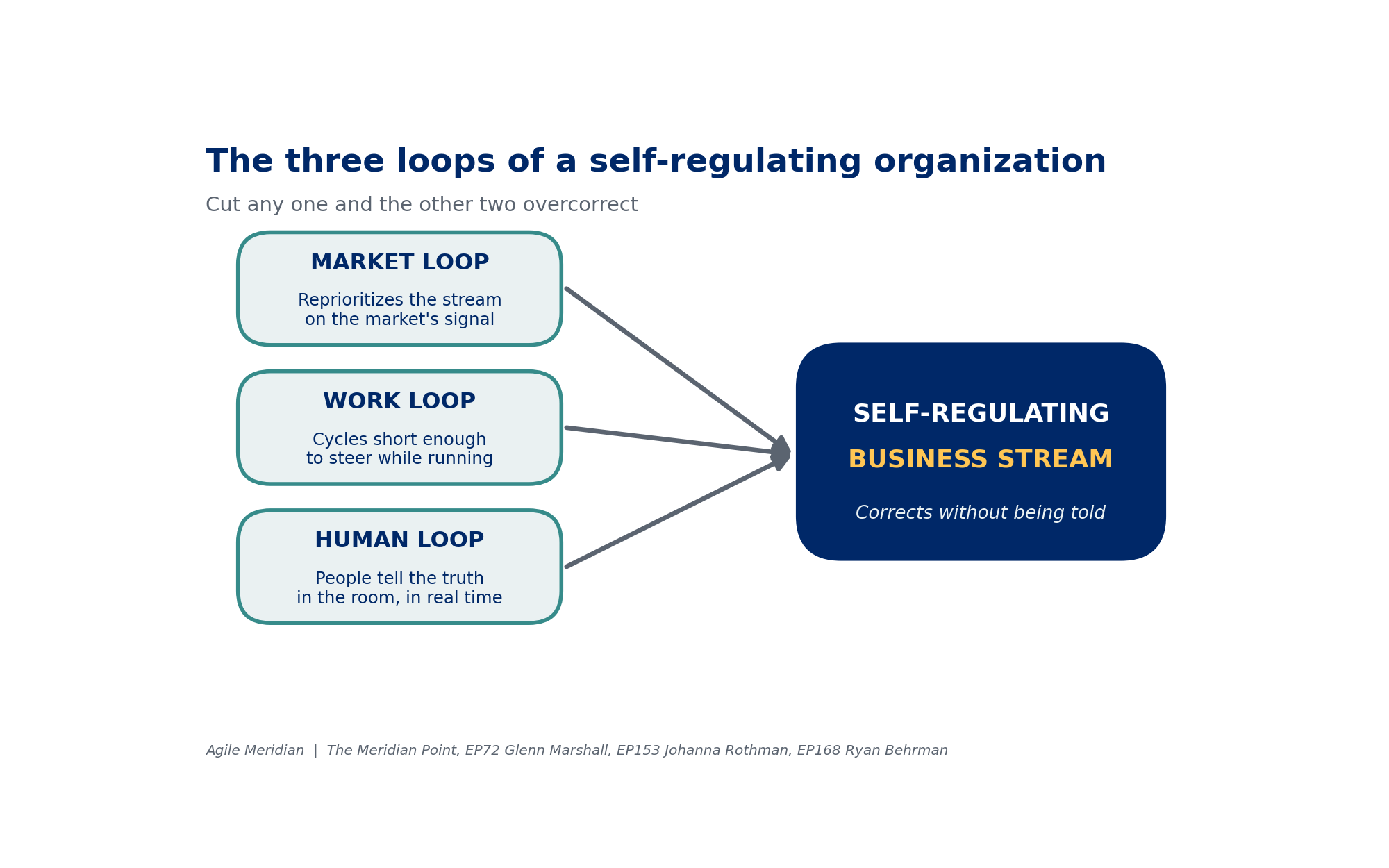
The market loop reprioritizes the stream. The work loop keeps each cycle short enough that you can still steer while it's running. The human loop is people telling each other the truth in the room, in real time. Cut any one and the other two overcorrect. A market loop with no human loop chases signals nobody will challenge. A short work loop feeding an org that punishes bad news just produces faster theater.
Most organizations cut all three and install governance instead. A review board that meets after the quarter has already closed. Controllers that sit outside the system and arrive late. Principle four says put the wolf in the valley, not a ranger with a quarterly census.
The strongest case against this
The sharpest counter doesn't come from a book. It comes from the comments under the last three articles in this series. Peter Merel, who founded the XSCALE Alliance, keeps returning to one point, and it's the right one to test this piece against.
His argument is Goodhart's Law. The moment a measure becomes a target, it gets gamed for local benefit. So a feedback loop isn't automatically a regulator. If the loop closes on a local number, speeding it up doesn't buy self-regulation. It buys Goodhart faster. The market loop I described corrects the stream toward a signal, and Peter's question is what that signal actually rewards. Point it at a local measure and the loop optimizes the gaming, not the work.
His fix is one global measure instead of many local ones. In XSCALE that's Throughput in Goldratt's sense, mutual benefit the whole stream shares, with nothing small enough to game. Autonomy in Alignment, the A in XSCALE, is that idea. Everyone carries the same responsibility and gets rewarded for the same outcome, so the loop has something real to close on.
Michael Porter's "What Is Strategy?" is the strategy-flavored version of the same worry. Strategy is choosing trade-offs and holding them. A company that adapts to every signal converges on operational effectiveness any rival can copy, and stops having a strategy at all. The visionary-product school adds the customer version. Customers couldn't describe the product that later defined the category, so the bets that matter most come from conviction the market can't yet confirm.
The answer concedes Peter's premise instead of dodging it. A loop regulates only when it closes on the right measure. Fast plus local is the faster-theater quadrant, quick signals nobody trusts and gaming at speed. Fast plus global is regulation. So principle four isn't only close the loop faster. It's close the loop on a measure the whole stream shares. That isn't a refutation of Peter. It's his point, carried into the design of the loop itself.
Porter gets the same answer from the other side. Self-regulation dampens as much as it amplifies. The wolves don't redesign the valley every week, they hold it inside a range. The stream adapts its work priorities to shared outcomes, not its identity, and the alignment half of the principle is exactly Porter's continuity. The loop tunes the how inside a held what.
The visionary objection cuts the other way on inspection. A conviction bet held against the market's early noise needs blunt internal feedback most of all. The only thing standing between conviction and delusion is people willing to report what they see. Strategies rarely die from too much feedback. They die from feedback withheld until the correction cost more than the truth would have.
Silence is a signal
One more loop hides in plain sight. A sponsor who goes quiet is data, not a dead end. Silence is feedback if you interpret it, and a system that only registers explicit signals misses the loudest one. Accept feedback includes the feedback nobody framed as feedback. The stakeholder who used to push back and has gone quiet. The initiative nobody argues about anymore because nobody expects it to move. Interpret the silence, because the system is talking whether or not anyone put it in words.
Three moves this week
Measure one wait time. Pick a decision that matters and clock how long it sits between ready and made. Not the work time. The wait. That number is where your loop is dying.
Shorten one loop. Take a cycle that closes monthly or quarterly and cut it to weekly. You want the feedback to arrive while you can still act on it.
Watch your own face. The next time someone brings you bad news, notice what you do. If you flinch, you just taught the room to route around you next time. Regulate the feedback you receive by making it safe to send.
Where this sits in the series
This builds on "Obtain a Yield: A Payoff You Defer Is a Payoff You Can't Steer." That piece said take the harvest in small reversible bets, so every bet returns a signal. This one answers the question that raises. Who interprets the signal, and what makes the next bet smarter? The yield only compounds inside loops that close by themselves. All three of them, running at once, the market loop and the work loop and the human loop.
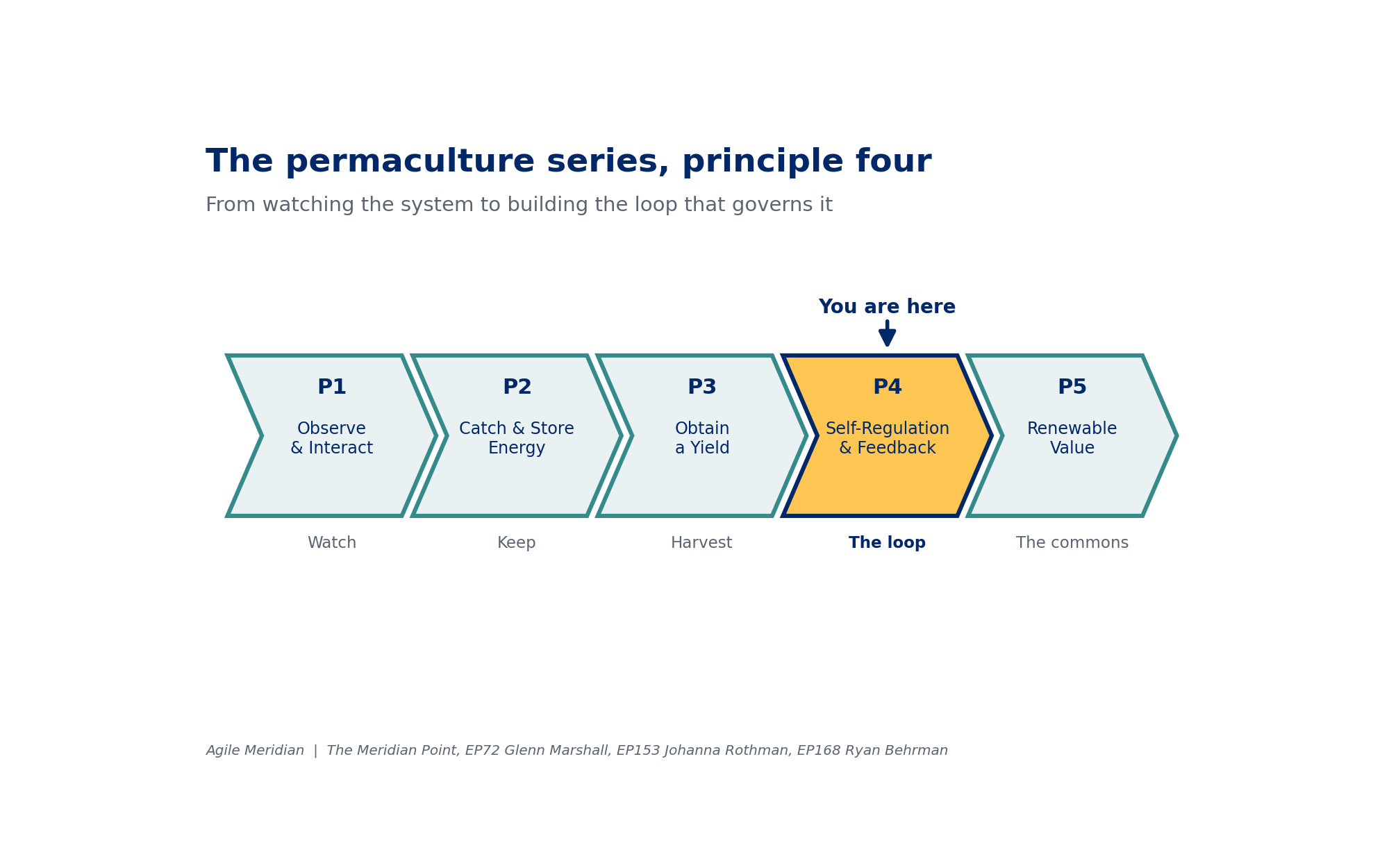
Part one said watch the system. Part two said keep what the watching taught you and concentrate your capacity. Part three said make the capacity produce a yield you can interpret. Part four says build the loops that interpret it and correct without being told.
Related Podcast Episodes
Episode 72: Permaculture vs Ecosystem Thinking, Principles 3 and 4, with Glenn Marshall. This is the spine of the piece. Glenn and I walk the Yellowstone case and then take it straight into how funded, self-managing streams regulate themselves without a controller at the top. If you want the ecology behind principle four, start here.
Episode 153: Management Myths Busted, with Johanna Rothman. Johanna is where the clock comes from. She splits feedback from evaluation and explains why performance management regulates nothing. Then she hands you the one measure most leaders never take: wait time.
Episode 168: Why Your Best People Keep Getting in Each Other's Way, with Ryan Behrman. Ryan brings the human loop down to one person. Every strength overplays without a correction, and the correction that works is a teammate's feedback in the moment, not a score at year-end.
If your organization is answering a steering problem by adding oversight, you're paying twice and correcting late. I help leadership teams build the loops that regulate a business stream from the inside. Let's find the wait time that's costing you the most. Book a 30-minute conversation.